The circular economy has become a crucial trend in the global petrochemical industry. While brands and manufacturers initially focused on recycling plastic waste from land sources, attention has now shifted to marine pollution – particularly fishing gear, which accounts for about 10% of all marine debris.
Made primarily from nylon, this material holds economic value, with some apparel brands already transforming recycled nylon fibers into textiles. However, nylon molecular chains are prone to breakage due to hydrolysis and repeated thermal processing, affecting mechanical properties and limiting applications.

Nylon Recycling and Pelletizing
This article examines global trends in fishing net recycling and introduces innovative melt-compounding technology developed by ITRI, along with downstream processing validation. This article examines global trends in fishing net recycling.
Introduction
The circular economy has become imperative for petrochemical companies worldwide, driving industry transformation toward developing eco-friendly thermoplastics and advanced recycling technologies.
Recent focus has expanded to marine plastic waste. A 2016 UN report identified marine debris as a critical threat to ocean life, with over 800 species affected annually. Each year, 8 million tons of plastic enter oceans, where 150 million tons already accumulate. Alarmingly, plastic may outweigh all fish in oceans by 2050. Among marine plastics, abandoned fishing nets pose particularly severe threats to marine ecosystems.
Marine Waste Recycling Trends
A Greenpeace Germany report titled “Ghost Gear: The Ocean’s Silent Killers” reveals 640,000 tons of lost or discarded fishing gear sink annually. Though just 10% of marine plastic, these “ghost nets” create deadly traps. Modern fishing nets primarily use HDPE, PA6, and PA66 – with deep-sea trawls favoring high-strength PA66 while coastal nets use PA6/PA66 blends.
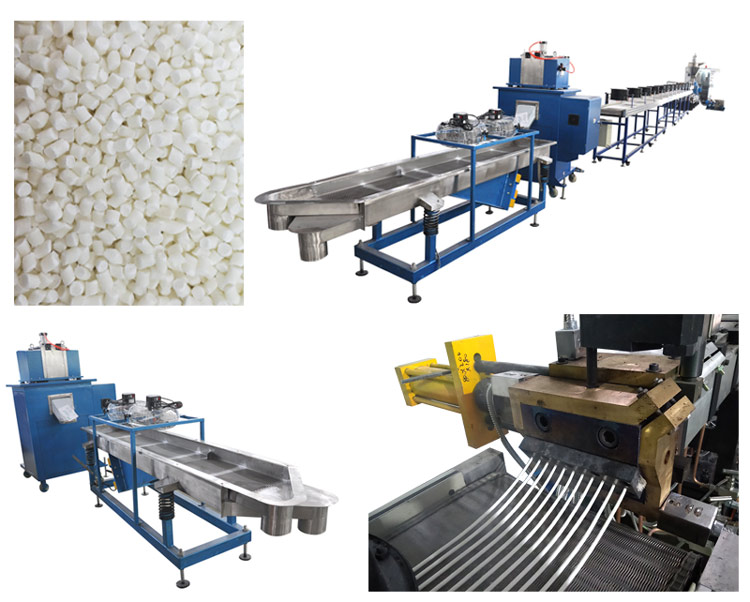
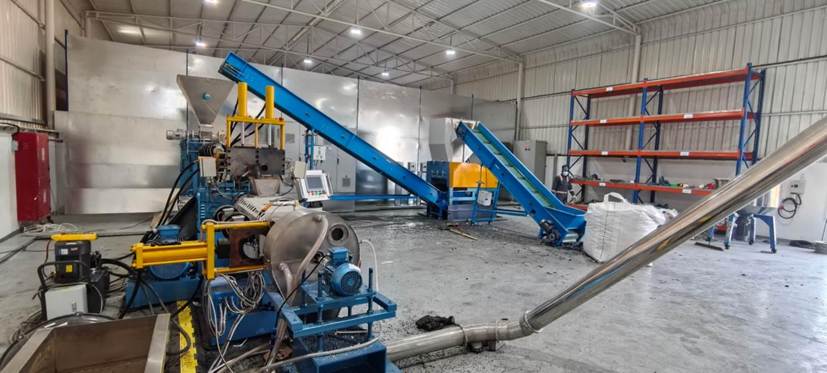
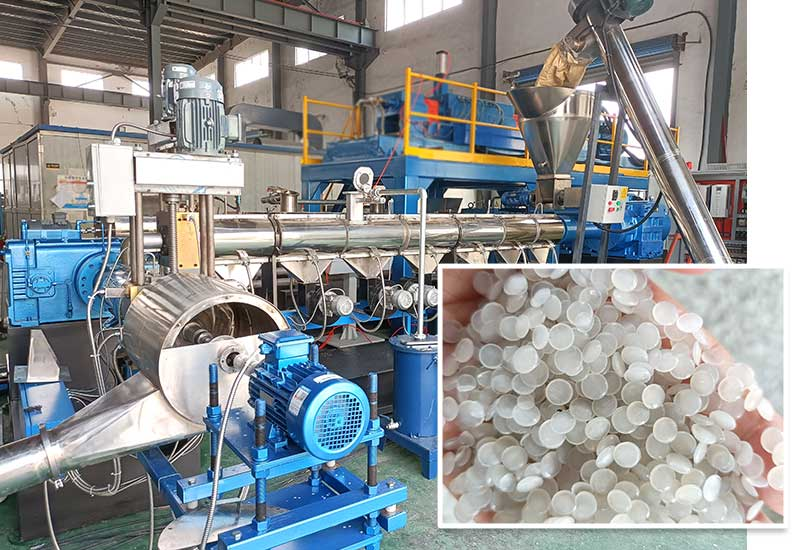
Nylon (polyamide) features amide groups (-NHCO-) in its molecular chain, creating strong intermolecular forces through hydrogen bonding that yield high crystallinity and excellent mechanical properties. The reactive amine and carboxyl end groups also facilitate modification. Standard recycling involves: collection-crushing-washing-pelletizing-compounding-processing.
Compounding and Modification Technology
Our advanced melt-compounding technology enables high-value applications of recycled nylon in consumer, electronic, and automotive sectors. Through molecular chain extension and optimized reactive extrusion, we’ve developed specialized twin-screw configurations that enhance additive dispersion while improving mechanical properties and processability.