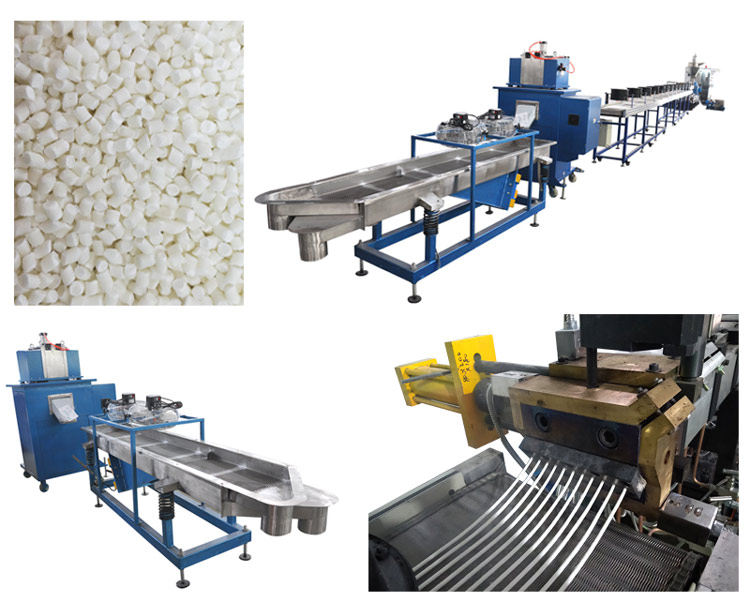
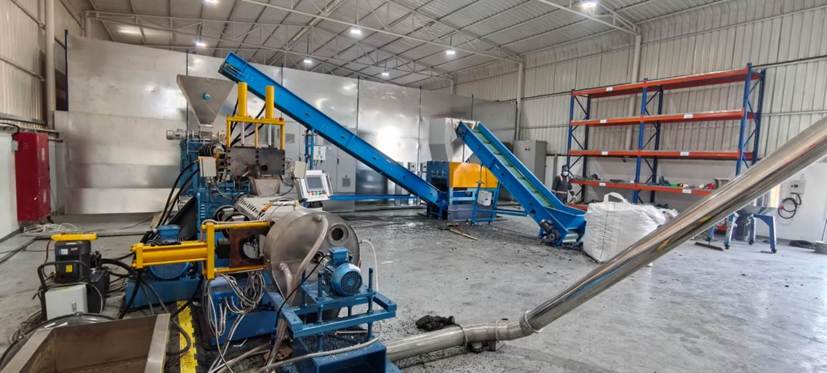
In plastic processing and modification, choosing the right extruder directly impacts product quality and production efficiency. While many users still believe twin screw extruders outperform three screw extruders—leading some buyers to prioritize them—both systems have unique strengths tailored to different applications.

Co-rotating Twin Screw Extruder
1. Structural Principles & Processing Characteristics
Though single, twin, and three screw extruders share similar basic mechanics (material conveying, melting, shearing, and dispersing via rotating screws), their mixing methods, output, and process suitability differ significantly:
A. Twin Screw Extruder (Co-Rotating)
- Uses two intermeshing screws for strong shear/dispersion
- Precise temperature/shear control, ideal for high-accuracy modification (e.g., grafting, cross-linking)
- Narrow residence time distribution, suited for reactive extrusion
- Excels in engineering plastics (PA, PC, PBT)
B. Three Screw Extruder
- Features one central + two side screws for complex flow fields
- Comparable dispersion uniformity to twin screws but 1.8–2.2x higher output at equal power/screw diameter
- 15–25% lower energy consumption, ideal for large-scale continuous production
2. Key Performance Comparisons
Dispersion Quality
Traditional views favor twin screw extruders, but three screw extruders match performance in most filled/blended systems (e.g., CaCO₃, talc). Twin screws retain an edge only in high-precision reactive extrusion (e.g., dynamic vulcanization TPV).
Output & Cost Efficiency
Three screw extruders dominate in masterbatch, colorants, and standard due to higher throughput.
Example: One three screw line can replace two twin screw lines, cutting equipment/space costs.
3. Selection Guidelines
Choose Twin Screw Extruders When:
High-precision chemical reactions (e.g., grafting) are required
Processing heat-sensitive materials (e.g., bioplastics)
For R&D or small-batch, multi-variant production
Choose Three Screw Extruders When:
Producing masterbatches or high-fill systems (e.g., CaCO₃, TiO₂)
Prioritizing output volume and cost-per-ton reduction
Factory space is limited (fewer machines needed)
Conclusion
While twin screw extruders excel in process control, three screw extruders lead in large-scale production efficiency. We recommend evaluating your needs (material properties, output goals, cost structure) and conducting trials if necessary. As three screw technology advances, its applicability in high-end modification will continue growing.