As global environmental awareness continues to increase, plastic recycling has become a key link in reducing environmental pollution and saving resources. The plastic recycling and washing production line plays an indispensable role in this process.

Plastic Recycling Washing Line
Through advanced technology and efficient operation, the plastic recycling and washing production line can effectively clean, separate and process various waste plastics, laying a solid foundation for subsequent recycling. In this article, we will explore in depth the working principle, main components and important role of the plastic recycling and washing production line in promoting the circular economy.
Working principle of plastic recycling washing line
The working principle of plastic recycling washing line covers multiple steps, each of which plays a vital role in the treatment of waste plastics. The following is a detailed introduction to the steps of manual recycling sorting, crushing, washing, drying, melting and granulation:
1. Manual recycling sorting
The first step in plastic recycling is manual sorting. Workers sort the collected waste plastics and remove non-plastic materials such as metal, glass, paper, etc. This step is very important because it ensures the purity of the materials processed in the subsequent production line and reduces unnecessary losses and equipment wear.

2. Shredding/Crushing
The sorted plastics are fed into the shredder, which cuts large pieces of plastic materials into smaller pieces or particles. This not only facilitates subsequent cleaning and processing, but also increases the surface area of the plastic, making the cleaning process more efficient. Common crushing equipment includes shear shredders and blade shredders.
3. Washing
The crushed plastic fragments enter the washing system for washing. Washing is usually divided into two parts: pre-washing and friction washing. In the pre-washing stage, water or detergent is used to remove dirt, dust and other light contaminants on the plastic surface; in the friction cleaning stage, mechanical friction is used to remove stubborn stains such as oil, glue and labels on the plastic surface. This process ensures the cleanliness of the plastic fragments and prepares them for subsequent recycling.
4. Drying
The washed plastic fragments contain a lot of water, so they need to be dried. First, the plastic fragments are initially dehydrated by a centrifugal dehydrator to remove most of the water. Then, the plastic fragments enter the dryer and further reduce the moisture content by heating or air drying. This step ensures that the plastic fragments reach a dryness suitable for reprocessing.

5. Melting
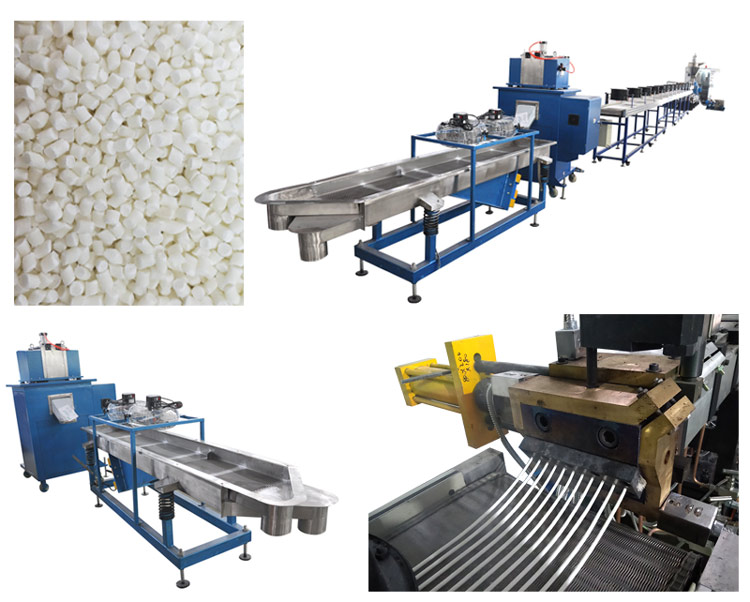
The dried plastic fragments are fed into an extruder or melting equipment and melted at high temperature into a uniform plastic melt. The melting process is an important step in the production of recycled plastics. By controlling the temperature and pressure of the melt, the melted plastic is ensured to have good uniformity and stability, laying the foundation for the granulation stage.
6. Pelletizing
The molten plastic melt is extruded through the die of the extruder and cut into uniform small particles. These particles are recycled plastic particles, which can be used as raw materials for the production of various plastic products. The granulation process not only increases the reuse value of plastics, but also facilitates storage, transportation and use.
Through these steps, the plastic recycling and washing production line converts waste plastics into high-quality recycled plastic particles, providing a sustainable solution for the recycling of plastic products.
Main components of plastic recycling and washing production line
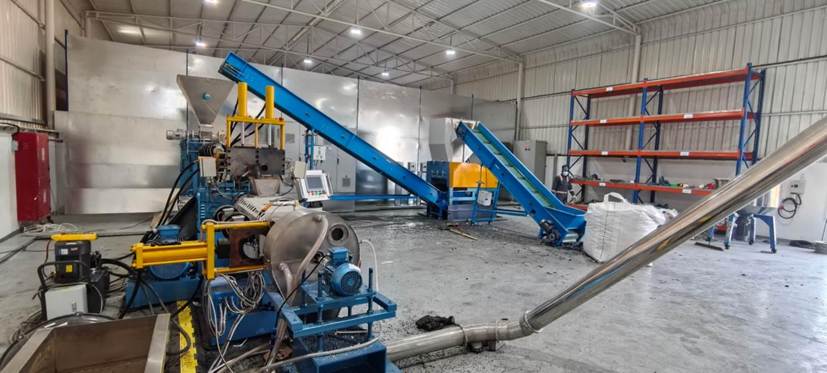
In the plastic recycling and washing production line, several key equipment work together to ensure that the waste plastic is washed, dried, melted, and finally processed into high-quality recycled plastic particles. The following is an introduction to these main equipment:
Shredder/Crusher
The shredder is the first key equipment in the recycling and washing production line, responsible for cutting large pieces of waste plastic into smaller pieces or particles. Through crushing, the volume of the plastic is significantly reduced and the surface area is increased, which helps with subsequent cleaning and processing.

There are many types of shredders, such as shear shredders and hammer shredders. The type of shredder selected depends on the type of plastic material to be processed and its hardness.
Washing Tank
The washing tank is the core equipment in the washing stage, which is used to remove dirt, dust and other impurities from the surface of plastic fragments. Generally, the washing tank can be divided into two parts: the pre-washing tank and the main washing tank.
The pre-washing tank is used for preliminary washing, while the main washing tank is usually equipped with a stirring device or a spraying device to further wash the plastic through the flow and friction of water. For plastics and impurities with different densities, flotation tanks may also be used for separation.
Drying System
The drying system is used to remove moisture from plastic fragments after cleaning. It usually includes two stages: a centrifugal dehydrator and a hot air dryer.
The centrifugal dehydrator spins out most of the moisture in the plastic fragments through high-speed rotation, while the hot air dryer further reduces the moisture content by heating or air drying. The efficiency of the drying system directly affects the subsequent processing performance of the plastic.
Pelletizer
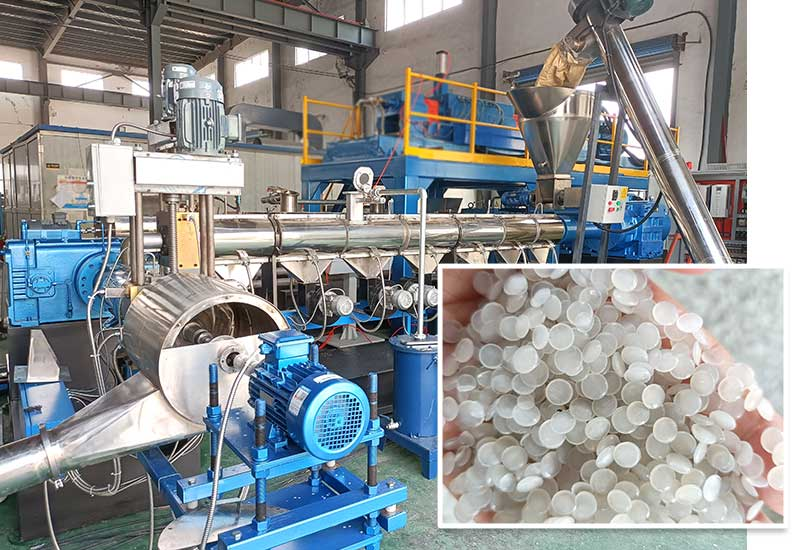
The granulator (also known as a pelletizer) is a device that melts and extrude dried plastic into pellets. After the plastic fragments are heated and melted, they are extruded through the die of the extruder and cut into uniform small pellets.
These pellets are recycled plastic pellets and can be used to make new plastic products. The stability and accuracy of the pelletizer have an important impact on the quality of the final product.
Separation Equipment
Separation equipment is usually used in conjunction with a cleaning tank. It uses the density difference of the material to separate plastic from impurities through flotation, gravity separation or air separation to ensure that the cleaned plastic is pure and free of impurities.

These key equipment work together to form an efficient plastic recycling and cleaning production line, which can convert waste plastics into high-quality recycled plastic particles, providing reliable technical support for recycling.
About us
Kairong Group is a professional manufacturer of plastic recycling and washing production lines, committed to providing efficient and reliable plastic recycling solutions to customers around the world.

The company has advanced production equipment and a technical team, focusing on designing and manufacturing various types of plastic recycling and washing equipment, including crushers, washing tanks, drying systems and granulators.
Kairong Group has won wide trust and praise in the industry for its excellent product quality and high-quality after-sales service, helping customers achieve efficient recycling and reuse of plastic waste.