If you’re evaluating an HDPE Bottle Recycling Washing Line, you’re not buying a single machine—you’re buying a process. The right configuration turns mixed, dirty bottles into consistent, clean flakes your downstream operation can actually use. The wrong configuration turns the same feedstock into downtime, high utility costs, and flakes that customers reject.

This guide keeps it decision-focused: what a washing line does, why demand is rising, what equipment a complete line typically includes, and how to vet suppliers.
What is an HDPE bottle recycling washing line?
An HDPE bottle recycling washing line is a series of machines that converts waste HDPE bottles (often from post-consumer bales) into washed, separated, and dried HDPE flakes. Those flakes can be sold as-is or fed into pelletizing/extrusion equipment.
In practice, the line is built around four jobs:
- Size reduction so contaminants can be removed efficiently
- Cleaning to remove dirt, residues, adhesives, and organics
- Separation to remove non-HDPE contamination (labels, metals, mixed polymers)
- Drying to stabilize flakes for storage and downstream processing
NIST’s overview of the U.S. plastics recycling economy emphasizes that mechanical recycling outcomes depend heavily on sorting and contamination control.
Post-consumer bales vs. in-house scrap: why the input matters
Design starts with feedstock:
- Post-consumer bottles (bales): higher variability and higher contamination. Expect labels, adhesives, residual product, sand/grit, and mixed plastics.
- In-house scrap / regrind: cleaner and more consistent. You may simplify some stages, but you still need separation and drying.
If you’ll run both, spec the line around the tougher stream, then define a “cleaner mode” for in-house scrap.
Why HDPE bottle recycling is becoming more popular

Two things are happening at the same time: demand for recycled content is rising, and processors are working to close a big recovery gap.
NIST’s material-flow work quantified that less than 10% of HDPE produced in the U.S. was recovered through recycling in 2015 and 2019. More recovery requires more capacity—but it also requires better quality control, because contamination is what limits yield and end-market value.
One more caution for buyers: if your business plan includes any food-contact packaging claims, the U.S. FDA explains that recycled plastics are evaluated based on the recycling process and intended conditions of use. Don’t let a supplier’s marketing language substitute for a real compliance and testing plan.
A complete HDPE bottle washing line: equipment modules
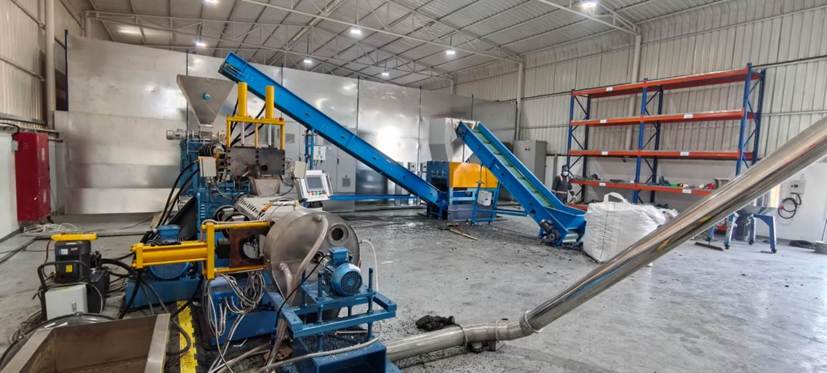
A complete HDPE washing line is composed of several key machines, each responsible for a specific stage in the recycling process. From feeding and crushing to washing and drying, every piece of equipment works together to produce clean, reusable HDPE flakes.
1. Feeding and Sorting Equipment
- Belt Conveyor Transports HDPE bottles, containers, and rigid plastics smoothly into the production line for continuous feeding.
- Bale Opener / Bag Breaker Opens compressed bales or bags of waste plastic, making the material easier to sort and process.
- Sorting Platform Used for manual or automatic removal of contaminants such as metal, paper, PET bottles, and non-HDPE materials.
2. Shredding and Crushing Equipment
- Shredder Breaks large HDPE drums, pipes, and containers into smaller pieces, reducing the load on the crusher.
- Crusher / Wet Crusher Further crushes the material into uniform flakes, typically 10–20 mm, while helping remove surface dirt during wet crushing.

3. Washing and Separation Equipment
- Friction Washer Uses high-speed rotating blades to scrub away labels, dirt, oil, and other surface impurities from HDPE flakes.
- Hot Washing Tank Removes stubborn contaminants such as glue, grease, detergent residue, and organic matter through heated water cleaning.
- Floating Washing Tank (Sink-Float Tank) Separates HDPE from heavier impurities based on density. HDPE flakes float, while heavier contaminants sink.
4. Dewatering and Drying Equipment
- Dewatering Machine Removes most of the water from washed HDPE flakes through centrifugal force.
- Hot Air Dryer / Pipeline Dryer Further reduces moisture content to ensure the flakes are dry enough for pelletizing or direct reuse.
5. Storage and Auxiliary Equipment
- Storage Hopper / Silo Collects and stores the cleaned HDPE flakes before the next recycling process.
- Metal Separator (Optional) Removes residual metal particles to improve final flake purity.
- Water Treatment System (Optional) Filters and recycles wash water, reducing water consumption and operating costs.
How to choose the right HDPE washing line supplier (buyer checklist)
At decision stage, supplier selection is mostly about risk: will the line hit your output spec with your actual feedstock, and will it stay stable after commissioning?
Step 1: Lock your “three specs” before you compare quotes
Feedstock definition
- Post-consumer bales vs in-house scrap (or both)
- Typical contaminants: labels, sand/grit, oils/residues, mixed plastics
Target output definition
- Washed flakes for resale vs flakes for pelletizing
- Any constraints: odor, color, contamination tolerance (define what “acceptable” means)
Capacity target (kg/h) + operating hours
- Don’t compare “1000 kg/h” quotes unless input condition and output spec are aligned.
Step 2: Require a module-to-risk justification
A strong supplier doesn’t just list machines—they justify them:
- “Your bale stream includes grit → here’s how we remove heavy fraction and keep tanks clean.”
- “Labels are a major issue → here’s the de-labeling approach and how we prevent stickies.”
- “You want hot wash → here’s control + rinsing + wastewater assumptions.”

Step 3: Ask for a verification plan (FAT/SAT + sampling)
Request a Factory Acceptance Test (FAT) and Site Acceptance Test (SAT) plan that defines:
- what material you’ll run (ideally your sample)
- what “pass” looks like (throughput stability, cleanliness checks, moisture checks)
- what gets recorded (amps, water flow, temperatures, downtime events)
If you’re targeting food-contact markets, align testing and claims with the FDA’s recycled-plastics program expectations (referenced earlier).
Step 4: Evaluate after-sales support like you evaluate the machines
Ask:
- Which spare parts should you stock for 12 months?
- What are typical wear parts and lead times?
- Who commissions the line, and what training is included?
- What’s the troubleshooting path (remote + on-site)?
Step 5: Watch for these red flags
- The supplier won’t ask detailed questions about your feedstock.
- No plan for labels/adhesives—just “it will be clean.”
- Hot wash is quoted with no utilities and wastewater assumptions.
- Utilities and footprint are vague or missing.
- No FAT/SAT acceptance criteria—only a quotation.
Conclusion
If you want a configuration and quote you can trust, prepare a short RFQ package:
- feedstock type (bales, in-house scrap, or both) + a few photos
- contamination notes (labels, sand/grit, oils/residues)
- capacity target (kg/h) + operating hours/day
- target output (washed flakes for resale vs for pelletizing)
Then share it with Kairong Group to recommend a washing-line configuration (including de-labeling and a hot wash option where needed) and provide a detailed quotation.