1. What screw configuration is recommended for PA6 or PA66 + 30% glass fiber?
There is no fixed number of kneading blocks for this formulation.
The key principle is:
- Ensure complete melting of nylon before fiber addition
- Use controlled shear after side feeding
- Avoid excessive kneading that shortens glass fiber length
- Screw configuration is usually adjusted based on torque capacity, target output, and required mechanical properties.
2. Where should the glass fiber side feeder be positioned?
Glass fiber is typically introduced after the polymer is fully melted.
Placing the side feeder too early increases fiber breakage.
Placing it too late may limit dispersion.
The exact position depends on the L/D ratio and machine size, but it is generally located in the middle section of the barrel, after a stable melt zone is formed.

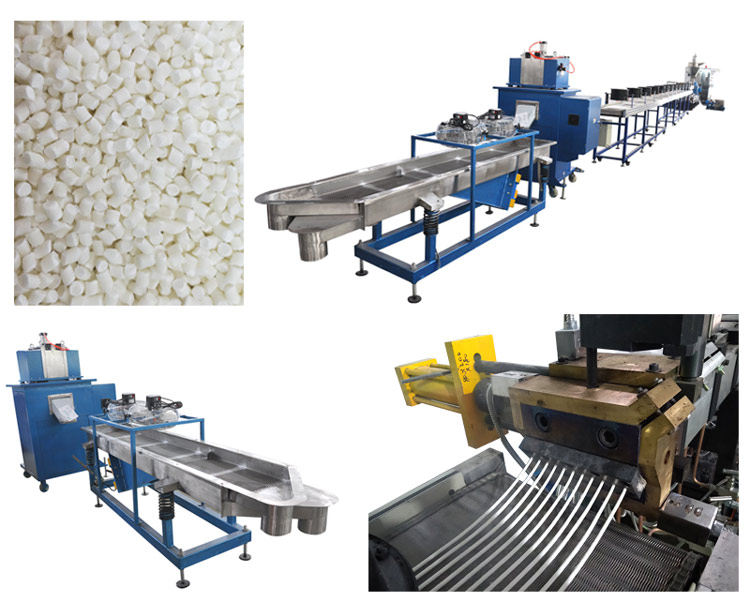
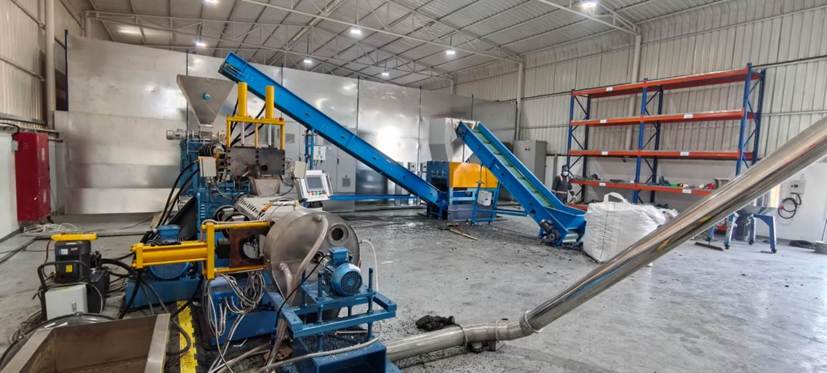
Engineering Plastic Twin Screw Extruder
3. Is standard nitrided barrel treatment sufficient for 30% GF?
For short-term trials, nitrided barrels may work.
For continuous industrial production, wear-resistant alloy liners are strongly recommended.
Glass fiber is highly abrasive, and standard treatments often lead to premature wear under long-term high-load operation.
4. What screw speed is suitable for 250 kg/h production?
Screw speed depends on screw diameter and torque rating.
For PA6/PA66 + 30% GF, production is typically achieved at moderate RPM rather than maximum speed to maintain melt stability and fiber integrity.
Stable torque and temperature control are more important than high rotational speed.
5. Is vacuum venting necessary for nylon compounding?
In most cases, yes.
Proper drying of nylon is essential, but vacuum venting provides additional process stability by removing residual moisture and volatiles, especially in high-throughput applications.